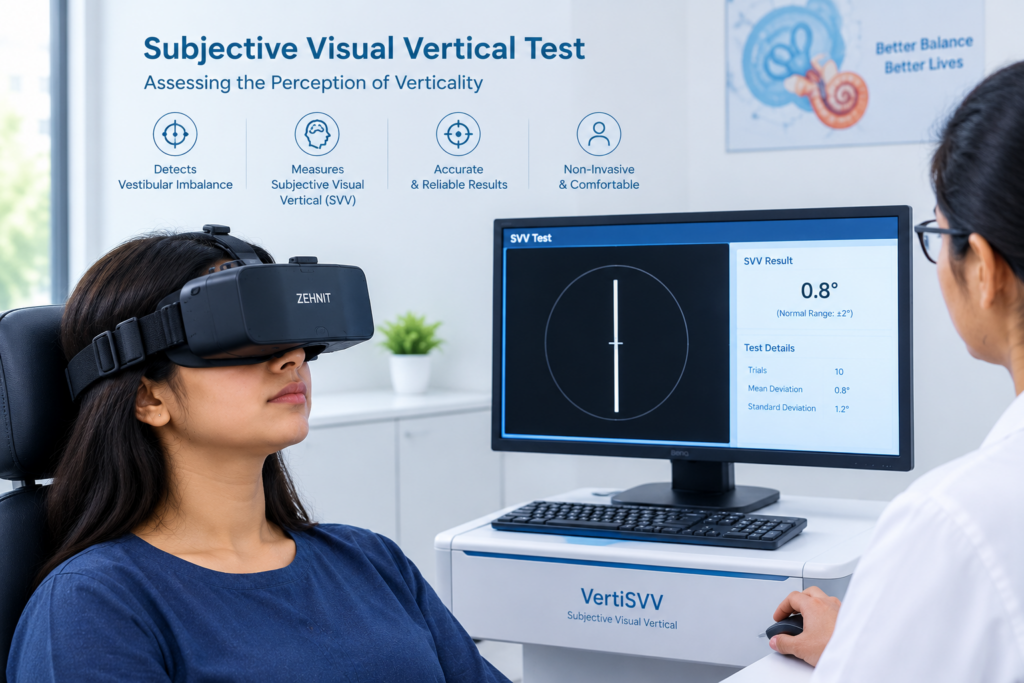
The Subjective Visual Vertical (SVV) test is a simple but powerful vestibular assessment now available in Dhaka at Vertigo & Balance Center. Unlike tests that record eye movements, SVV measures how accurately your brain perceives “true vertical” — a direct window into how well your otolith organs (specifically the utricle) are functioning. It’s often used alongside vHIT and VNG to build a complete picture of your balance system. Here’s what an SVV test in Dhaka involves and what your results mean.
MINUTES
NORMAL RANGE
NON-INVASIVE
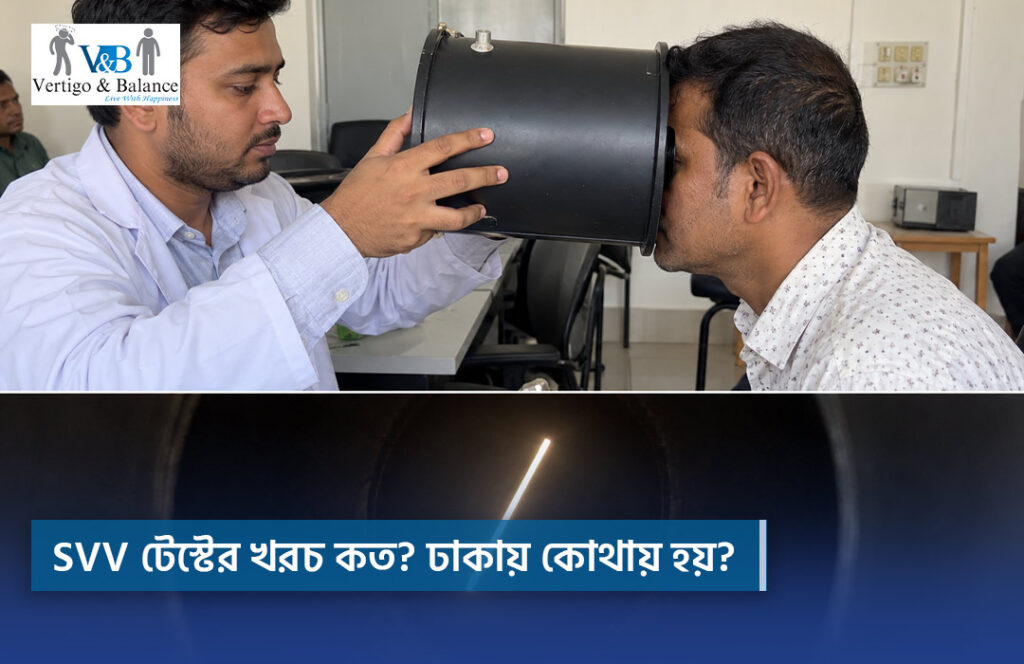
The Subjective Visual Vertical (SVV) test is a non-invasive vestibular assessment used to evaluate a person’s perception of vertical orientation. It measures how accurately an individual can align a visual reference to what they perceive as the true vertical position, without relying on external visual cues.
This test primarily reflects the functional integrity of the otolith organs, especially the utricle, and their central vestibular pathways. SVV testing is widely used in the evaluation of vertigo, dizziness, balance disorders, and spatial disorientation.
The SVV test is performed to:
Abnormal SVV findings may indicate vestibular imbalance even when other vestibular tests appear normal.
Human perception of verticality depends on the integration of vestibular, visual, and proprioceptive inputs. The otolith organs detect head tilt and linear acceleration relative to gravity. When otolith signals from both sides are balanced, the brain accurately perceives vertical orientation.
If there is dysfunction in one side of the vestibular system or in central vestibular pathways, this balance is disrupted. As a result, the individual may perceive vertical orientation as tilted, which is detected during the SVV test.
The patient is seated in an upright position
External visual orientation cues are minimized or eliminated
A luminous or visible line is presented
The patient adjusts the line until it appears perfectly vertical
The angular deviation from true vertical is measured in degrees
The SVV test is non-invasive, does not involve radiation or medication, and is safe for all age groups. Patients may stop the test at any time if discomfort or dizziness occurs.
Normal SVV: Deviation within ±2 degrees from true vertical.
Abnormal SVV: Deviation exceeding normal limits.
Typical interpretations:
SVV results should always be interpreted alongside clinical history and other vestibular tests.
The SVV test is commonly used in patients with:
SVV test results provide valuable information about vestibular function but must be interpreted by trained professionals. Findings are considered as part of a comprehensive vestibular and balance assessment.
Your doctor will explain the results clearly and relate them to your symptoms and other test findings.
The SVV test is only one part of balance evaluation. Results are interpreted together with your medical history and other vestibular tests to ensure accurate diagnosis and treatment.
The Subjective Visual Vertical (SVV) test is a specialized vestibular assessment that measures how accurately your brain perceives “true vertical.” It evaluates the functional integrity of your inner ear otolith organs (specifically the utricle) and their central neural pathways without relying on external visual cues.
An abnormal SVV result (a tilt exceeding normal limits from true vertical) often indicates a vestibular imbalance or asymmetry. A tilt toward one side typically suggests peripheral vestibular dysfunction (like vestibular neuritis), while larger or inconsistent deviations can point to central vestibular issues.
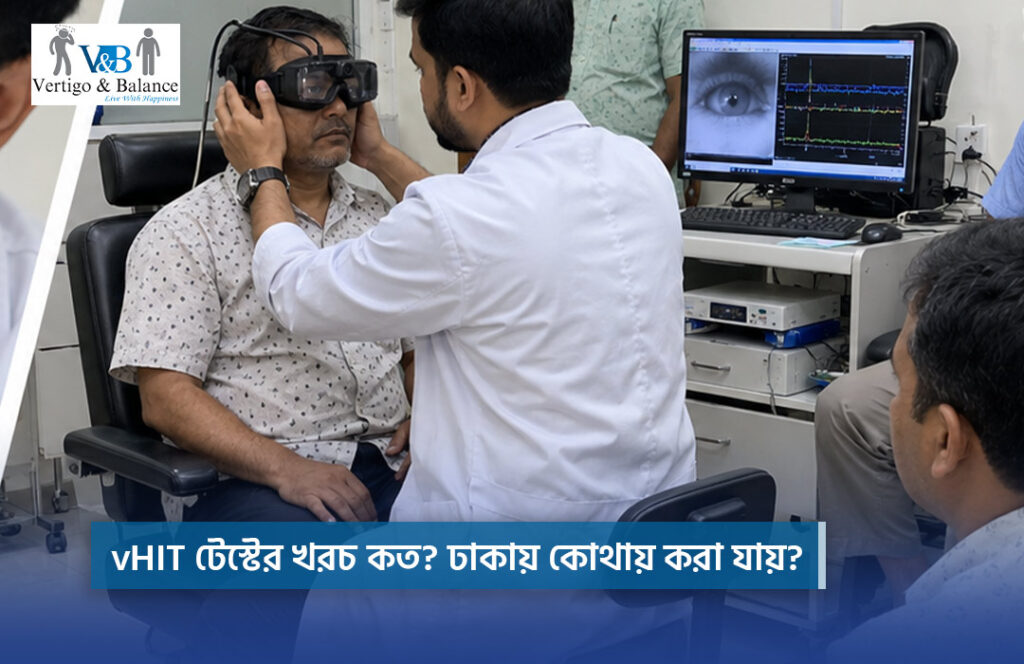
While vHIT and VNG primarily evaluate the semicircular canals and eye movement reflexes, the SVV test specifically checks your otolith (utricle) function and spatial orientation. Doctors often combine these tests to get a complete, multi-dimensional assessment of your balance system.
No. SVV should not be used as a standalone diagnostic tool — results are always interpreted alongside your history and other vestibular tests like vHIT or VNG.
Vestibular assessments performed
Dedicated diagnostic test modalities
BMDC-registered vestibular specialists
Established-Concept Tower, Panthapath
Vestibular Specialist & Neurotologist BMDC Reg. 65718-Founder & Chief Consultant
Vestibular Rehabilitation Specialist BMDC Reg. A-105382-AIB-Certified, VRT Center Lead
Trained Vestibular Professional
Concept Tower (3rd Floor), Room: 337 & 338. 68-69, Green Road, Dhaka-1205