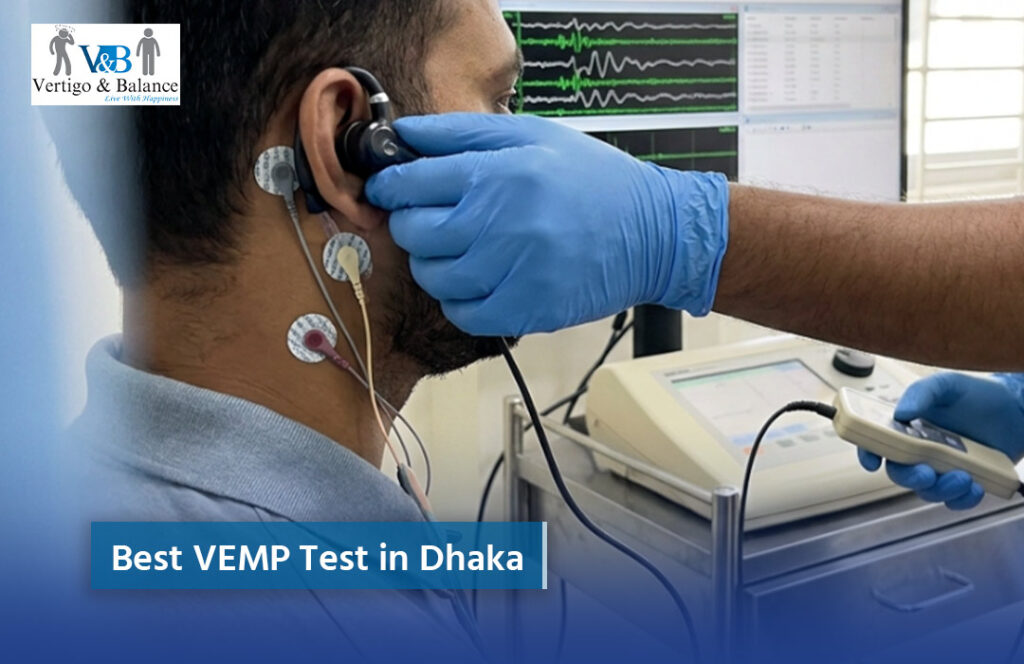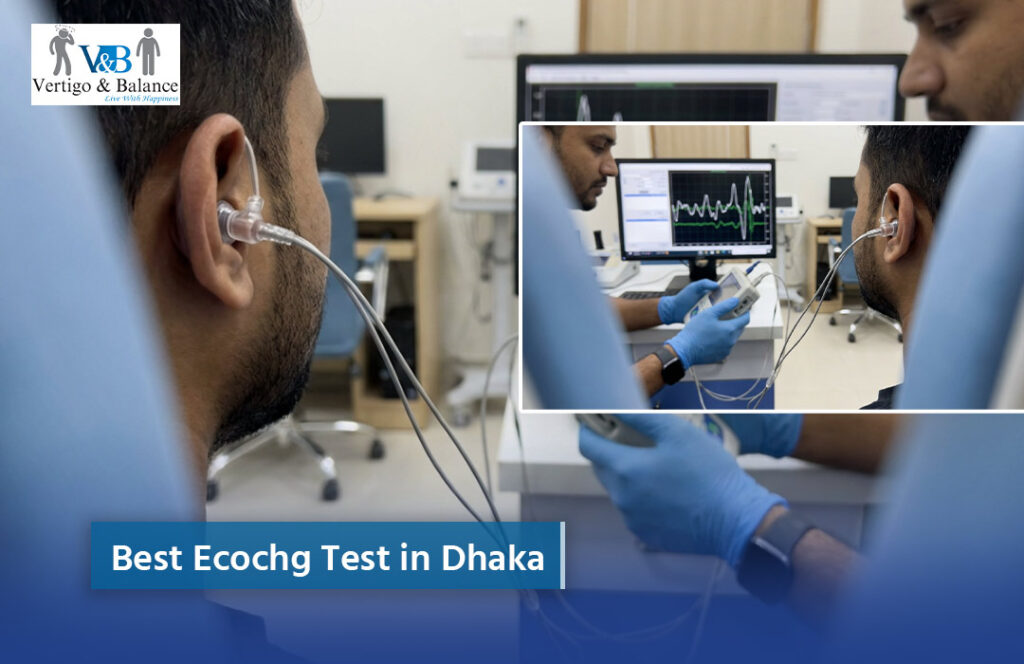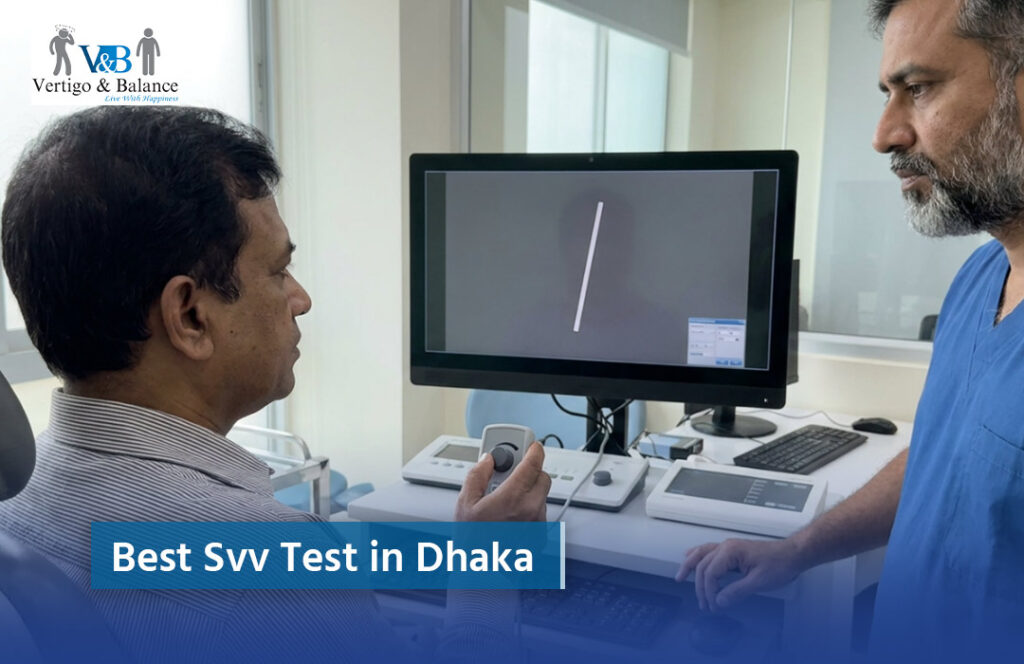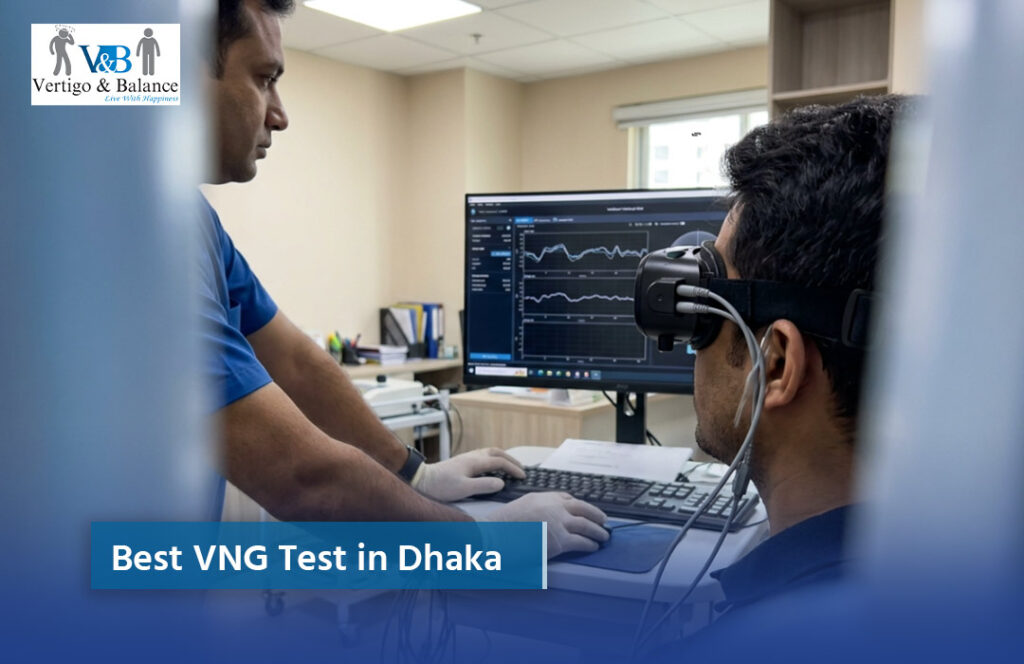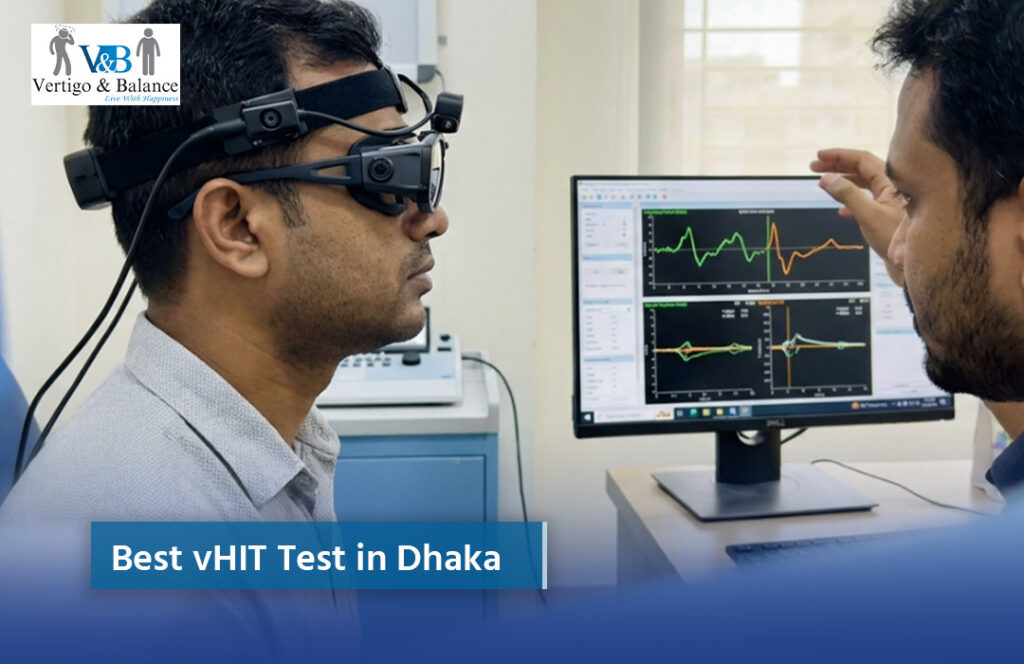
Vestibular Evoked Myogenic Potential (VEMP) testing is an advanced electrophysiological test now available in Dhaka at Vertigo & Balance Center. Unlike vHIT or VNG, which assess the semicircular canals, VEMP specifically evaluates the otolith organs — the saccule and utricle — and their nerve pathways, using sound- or vibration-triggered reflex responses. It’s especially valuable when other vestibular tests come back normal but symptoms persist. Here’s what a VEMP test in Dhaka involves and what your results mean.
MINUTES
6 CANALS TESTED
Video Goggles NON-INVASIVE
Vestibular Evoked Myogenic Potential (VEMP) testing is an electrophysiological test that evaluates the function of the otolith organs (saccule and utricle) and their neural pathways, using sound- or vibration-evoked reflex muscle responses.
Unlike caloric testing, which assesses the horizontal semicircular canal, VEMP specifically evaluates otolithic and inferior/superior vestibular nerve function, making it a valuable complement to VNG and vHIT in a complete vestibular work-up.
The VEMP test is performed to:
VEMP provides objective data on otolith and lower/upper vestibular nerve pathways that cannot be obtained from VNG, caloric testing, or vHIT alone.
VEMP testing is commonly indicated for:
Vestibular neuritis
Unilateral or bilateral vestibular hypofunction
Peripheral vestibular disorders
VEMP is a non-invasive and safe test. Some patients may experience mild neck fatigue during cVEMP testing due to sustained muscle contraction. All procedures are performed under professional supervision, and the test can be paused if needed.
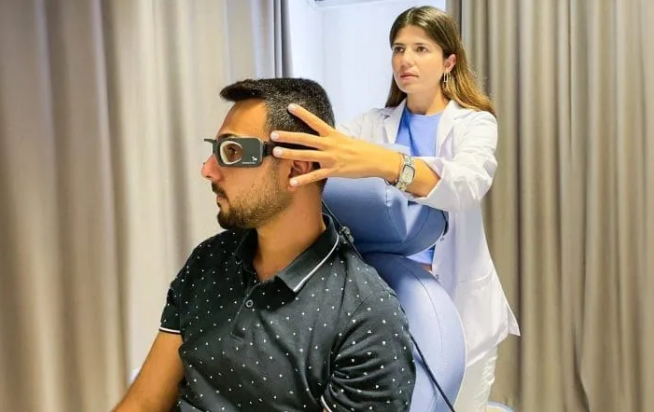
Surface electrodes are placed on the appropriate muscles (SCM for cVEMP, infraorbital for oVEMP) The patient performs the required muscle contraction or gaze position Repeated sound or vibration stimuli are presented to each ear Muscle responses are recorded, averaged, and analyzed for presence, amplitude, threshold, and latency The complete test usually takes 30–45 minutes, depending on the number of conditions tested (cVEMP and/or oVEMP, both ears).
Requires adequate muscle contraction and patient cooperation Pre-existing neck or shoulder conditions may limit cVEMP testing Conductive hearing loss may affect air-conducted stimulus responses Results must be interpreted in clinical context alongside other vestibular tests VEMP should be combined with VNG, vHIT, and audiometric evaluation for a comprehensive vestibular assessment.
recorded from the sternocleidomastoid (SCM) muscle; reflects saccular and inferior vestibular nerve function
ecorded from muscles beneath the eye; reflects utricular and superior vestibular nerve function
No. VEMP is non-invasive — surface electrodes are placed on the skin (not inserted), and the sound/vibration stimulus is not painful, though it can feel loud.
The complete test usually takes 30–45 minutes, depending on how many conditions are tested (cVEMP, oVEMP, both ears).
vHIT and VNG mainly assess the semicircular canals (rotational balance). VEMP specifically tests the otolith organs — the saccule and utricle — which respond to sound and vibration rather than head rotation. Doctors often order VEMP when vHIT/VNG results are normal but symptoms persist.
You may feel mild neck fatigue during cVEMP if you need to hold your head turned or lifted for a period. The sound stimulus is loud but not harmful.
No single test is used alone. VEMP provides important supporting evidence for conditions like Ménière’s disease and superior semicircular canal dehiscence (SSCD), but results are always combined with your history and other vestibular tests.
Vestibular assessments performed
Dedicated diagnostic test modalities
BMDC-registered vestibular specialists
Established-Concept Tower, Panthapath
Vestibular Specialist & Neurotologist BMDC Reg. 65718-Founder & Chief Consultant
Vestibular Rehabilitation Specialist BMDC Reg. A-105382-AIB-Certified, VRT Center Lead
Trained Vestibular Professional
Diagnostic Evaluation and Treatment Planning