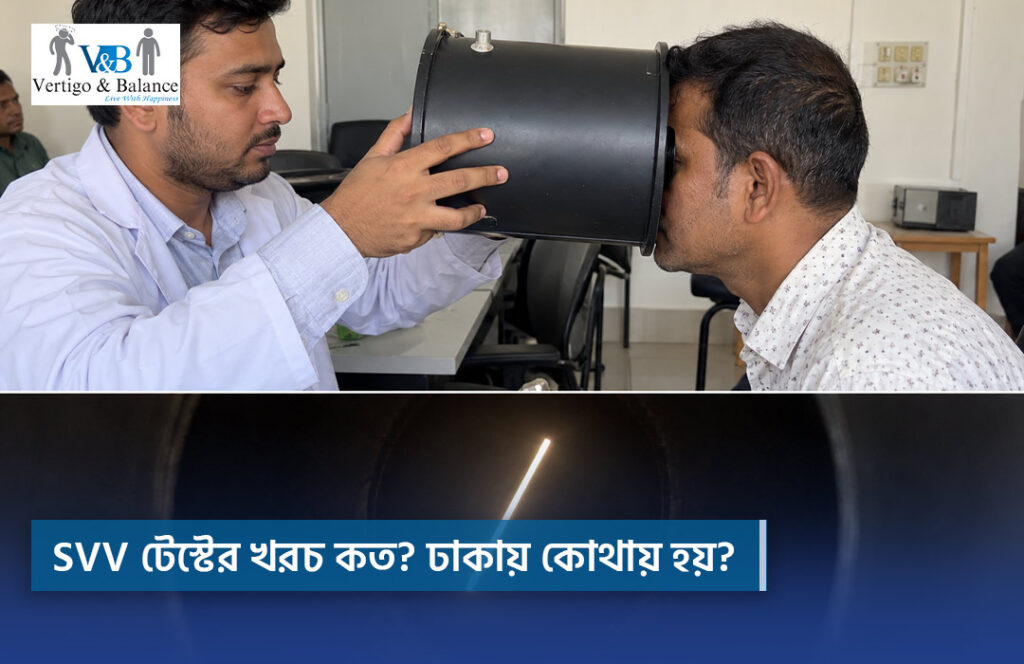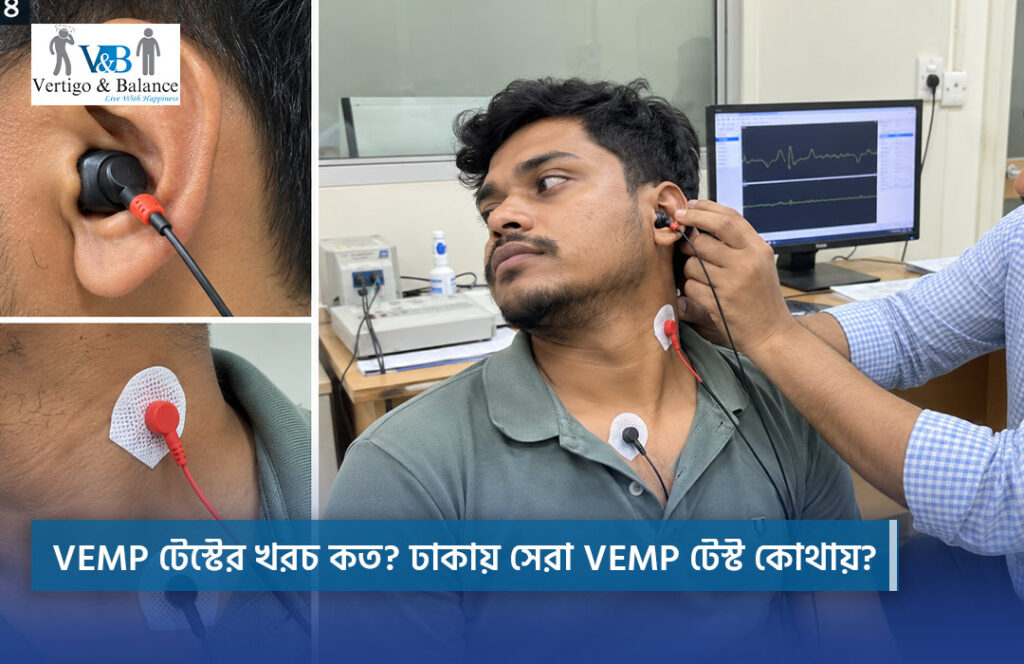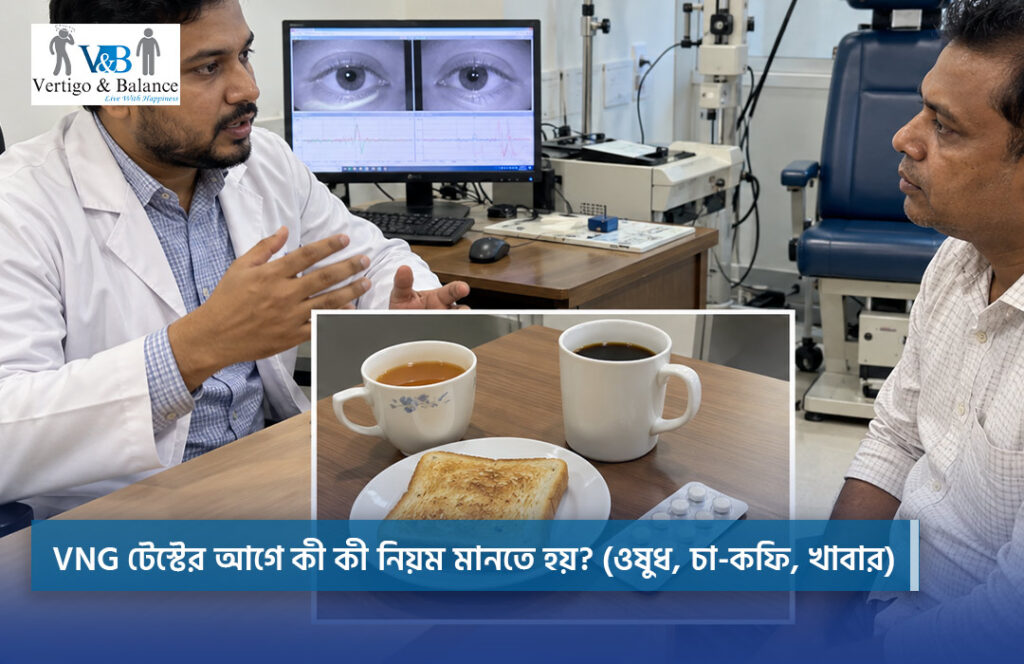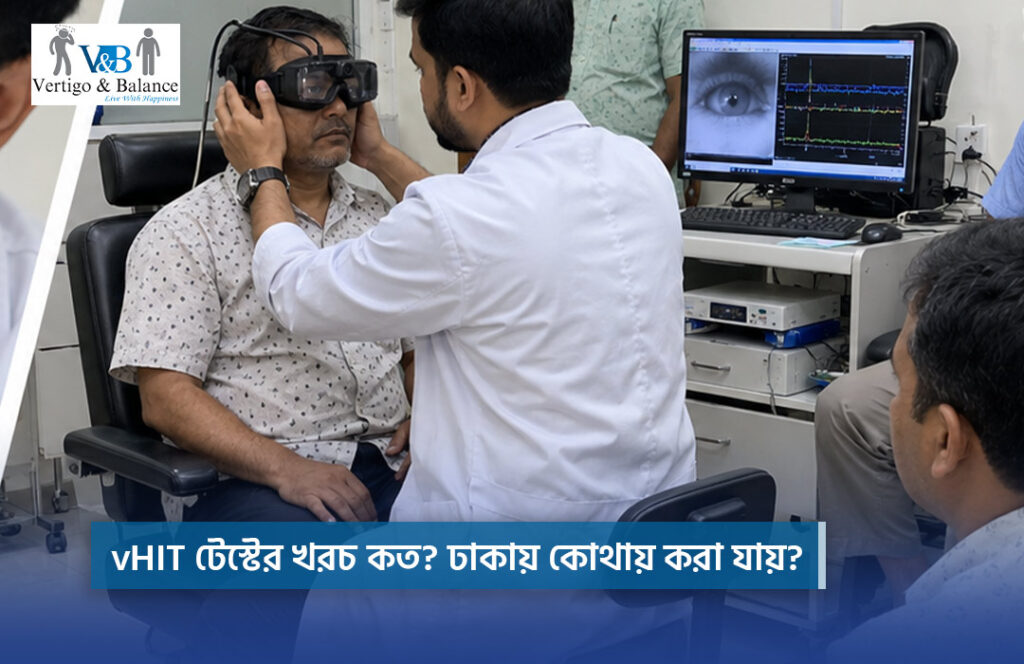
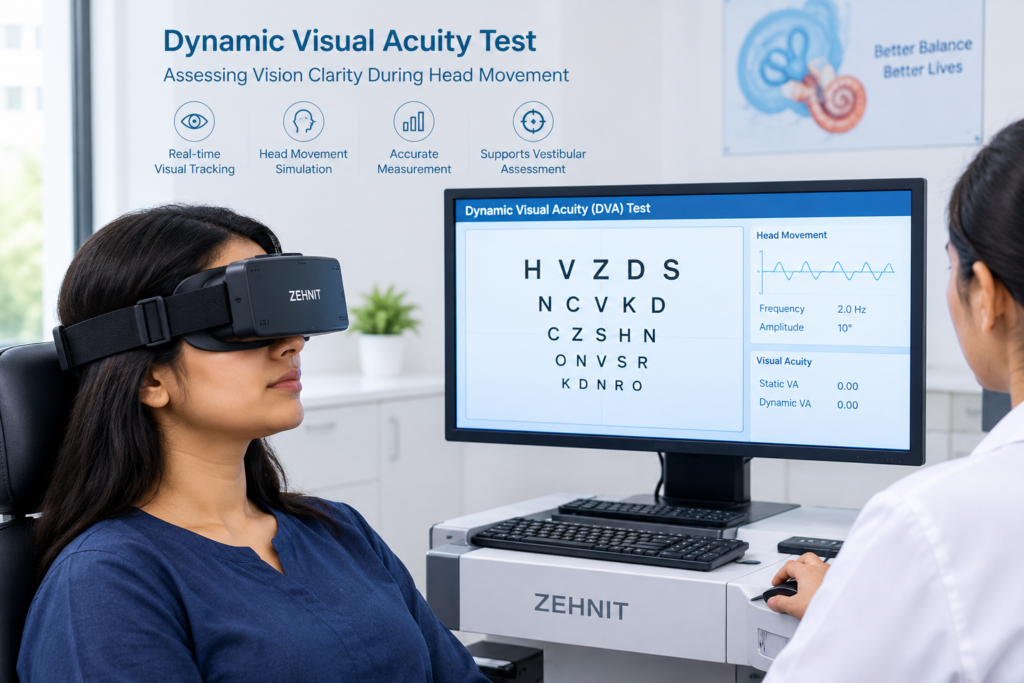
The Dynamic Visual Acuity (DVA) test is a simple, functional vestibular test now available in Dhaka at Vertigo & Balance Center. If you’ve noticed blurry or bouncing vision while walking, turning your head, or moving around, DVA testing can reveal whether your vestibulo-ocular reflex (VOR) is the cause. It’s often used alongside vHIT and VNG to build a complete, functional picture of your balance system. Here’s what a DVA test in Dhaka involves and what your results mean.
MINUTES
CONDITIONS (Static & Dynamic)
NON-INVASIVE
The Dynamic Visual Acuity (DVA) test is a vestibular function assessment used to evaluate a person’s ability to maintain clear vision during head movement. It primarily assesses the function of the vestibulo-ocular reflex (VOR), which stabilizes vision by coordinating eye movements with head movements.
In normal conditions, when the head moves, the eyes move in the opposite direction at the same speed, allowing objects to remain clear and stable. If this reflex is impaired, patients may experience blurred vision, bouncing of objects, or difficulty focusing while moving.
The DVA test is performed to:
This test provides functional information that static vision tests cannot detect.
Clear vision during motion depends on the vestibulo-ocular reflex. The semicircular canals of the inner ear detect angular head movements and send signals to the brainstem, which then generate compensatory eye movements.
When the vestibular system is impaired, eye movements fail to compensate accurately for head motion. This leads to reduced visual clarity during movement, which is detected by comparing visual acuity during head stillness and during head motion.
The DVA test directly reflects this functional deficit.
isual acuity is first measured with the head stationary
The patient is then asked to move the head side-to-side (or up-down) at a controlled speed
Visual acuity is measured again during head movement
The difference between static and dynamic visual acuity is calculated
The DVA test is safe, non-invasive, and does not involve medication or radiation. The test can be stopped at any time if the patient experiences discomfort or increased dizziness.
DVA test results provide important information about functional vestibular performance. Findings must be interpreted by trained professionals and correlated with clinical history and other vestibular assessments.
Clinical Use: Diagnostic Evaluation and Treatment Planning
The DVA test is commonly indicated in patients with:
Normal DVA: Minimal or no reduction in visual acuity during head movement.
Abnormal DVA: Significant drop in visual acuity during head motion.
Typical interpretations:
Results should always be interpreted in the context of symptoms and other vestibular tests.
The Dynamic Visual Acuity (DVA) test is a functional vestibular assessment that measures your ability to see clearly while your head is moving. It evaluates the efficiency of the Vestibulo-Ocular Reflex (VOR), which keeps your vision stable when walking, turning, or moving your head.
Blurry or bouncing vision during head movement (a condition called oscillopsia) often indicates an impaired Vestibulo-Ocular Reflex (VOR). The DVA test directly measures this loss of visual stability to confirm if your inner ear balance system is the root cause.
While both evaluate the VOR, vHIT directly measures eye velocity using high-speed video goggles during rapid head movements. In contrast, DVA measures the functional outcome—how much your actual reading vision drops when your head moves. They are often used together for a complete diagnosis.
The test compares two visual acuity readings:
Static Visual Acuity: You read a standard vision chart while sitting still.
Dynamic Visual Acuity: You read the chart again while gently moving your head side-to-side or up-and-down at a set speed.
The difference between these two scores determines VOR impairment.
Vestibular assessments performed
Dedicated diagnostic test modalities
BMDC-registered vestibular specialists
Established-Concept Tower, Panthapath
Vestibular Specialist & Neurotologist BMDC Reg. 65718-Founder & Chief Consultant
Vestibular Rehabilitation Specialist BMDC Reg. A-105382-AIB-Certified, VRT Center Lead
Trained Vestibular Professional
Concept Tower (3rd Floor), Room: 337 & 338. 68-69, Green Road, Dhaka-1205