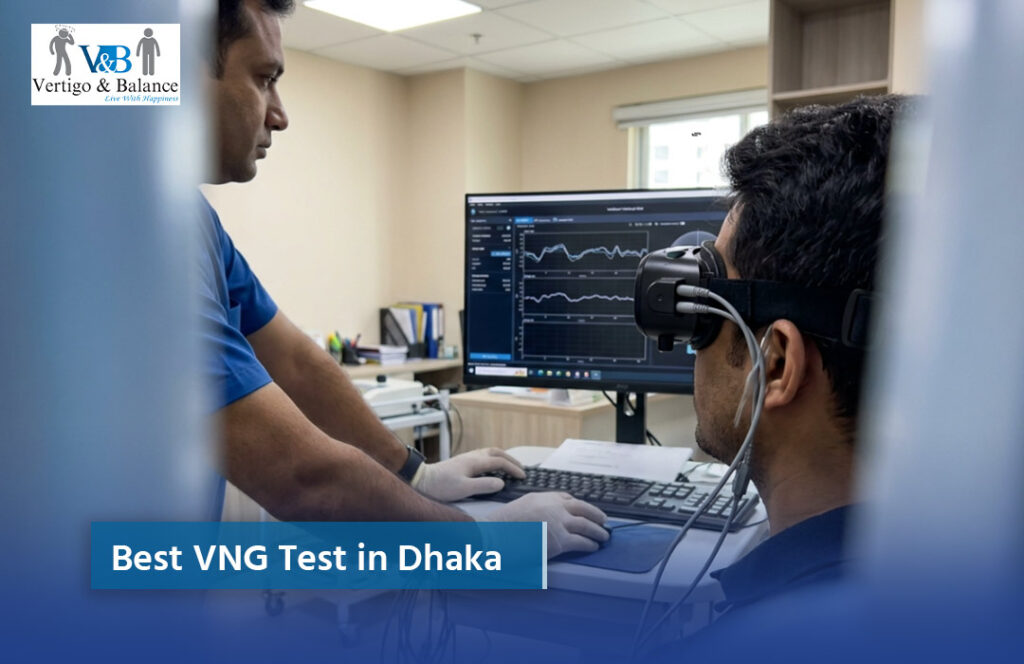
Videonystagmography (VNG) is one of the most comprehensive vestibular diagnostic tests available in Dhaka, combining several subtests to give a complete picture of your inner ear balance function and eye movement control. At Vertigo & Balance Center, our VNG test helps pinpoint whether your dizziness or vertigo is coming from the inner ear (peripheral) or the brain (central) — a critical distinction for choosing the right treatment. If you’re looking for a VNG test in Dhaka, here’s everything the test involves.
MINUTES
6 CANALS TESTED
Video Goggles NON-INVASIVE
Videonystagmography (VNG) is a comprehensive vestibular diagnostic test used to evaluate the function of the inner ear balance organs, eye movement control, and their central connections. The test records eye movements using infrared video cameras while the patient performs a series of visual and positional tasks.
Abnormal eye movements, particularly nystagmus, provide valuable information about disorders of the peripheral and central vestibular systems. VNG is considered one of the core investigations for patients with vertigo, dizziness, and balance disorders.
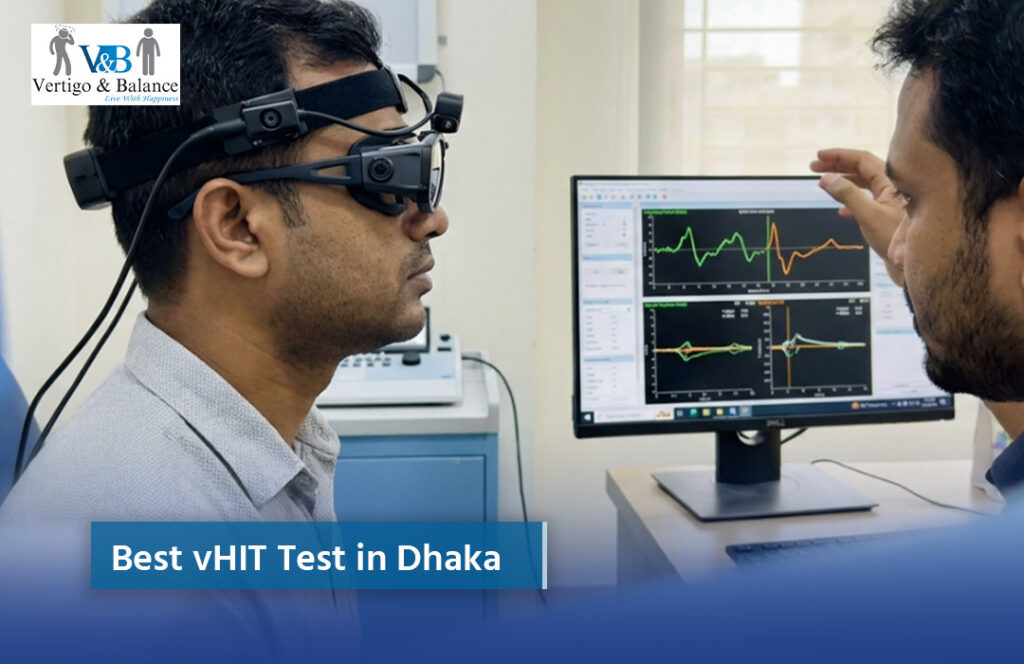
The vHIT is performed to:
Unlike traditional tests, vHIT evaluates vestibular function under physiological head movement conditions — giving doctors a real-world picture of how your balance system responds.
Normal balance depends on coordination between the vestibular system, visual system, and oculomotor pathways. The vestibular organs send signals to the brainstem, which then control eye movements to maintain visual stability.
When vestibular or central pathways are affected, abnormal eye movements occur. VNG captures these eye movements in darkness or with visual stimuli, allowing precise analysis of vestibulo-ocular reflexes and oculomotor control.
Vestibular neuritis
Unilateral or bilateral vestibular hypofunction
Peripheral vestibular disorders
Unexplained dizziness with suspected inner-ear cause
VNG is a non-invasive and safe test. Some patients may experience temporary dizziness or nausea, especially during caloric testing. All procedures are performed under professional supervision, and the test can be paused at any time if needed.
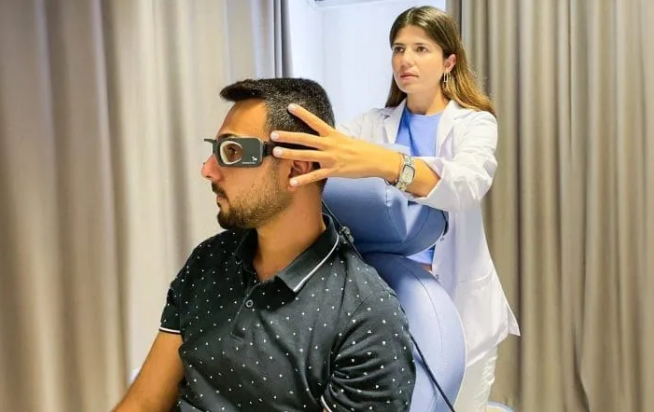
The patient wears infrared video goggles Eye movements are recorded in light and darkness Visual targets and head/body positions are changed systematically Caloric stimulation is performed if indicated The complete test usually takes 45–60 minutes.
VNG testing is commonly recommended for patients with: Persistent or recurrent vertigo Unexplained dizziness Balance instability or falls Suspected vestibular neuritis or labyrinthitis Suspected central vestibular disorders Pre-rehabilitation or pre-surgical evaluation
Requires patient cooperation and alertness Visual impairment may affect certain subtests Caloric test assesses only low-frequency vestibular function Results must be interpreted in clinical context VNG should be combined with other vestibular tests for a comprehensive evaluation.
Normal VNG : Symmetrical eye movement responses and normal oculomotor control. Abnormal VNG : Presence of spontaneous or positional nystagmus, abnormal oculomotor responses, or caloric weakness.
No. VNG is non-invasive. Some patients feel brief dizziness or mild nausea during the caloric portion, but this passes quickly once the test is complete.
The full test usually takes about 45–60 minutes, covering oculomotor, positional, and caloric subtests.
VNG is a broader test battery covering oculomotor, positional, and caloric responses, mainly testing lower-frequency vestibular function. vHIT specifically measures high-frequency VOR gain for each semicircular canal individually. Many patients benefit from both as complementary tests.
Mild, temporary dizziness during caloric testing is common and expected — it resolves shortly after the irrigation stops.
Your doctor may ask you to avoid certain medications, alcohol, or heavy meals before testing, and to remove contact lenses or eye makeup. Confirm specific instructions when booking.
Vestibular assessments performed
Dedicated diagnostic test modalities
BMDC-registered vestibular specialists
Established-Concept Tower, Panthapath
Vestibular Specialist & Neurotologist BMDC Reg. 65718-Founder & Chief Consultant
Vestibular Rehabilitation Specialist BMDC Reg. A-105382-AIB-Certified, VRT Center Lead
Trained Vestibular Professional
Diagnostic Evaluation and Treatment Planning