
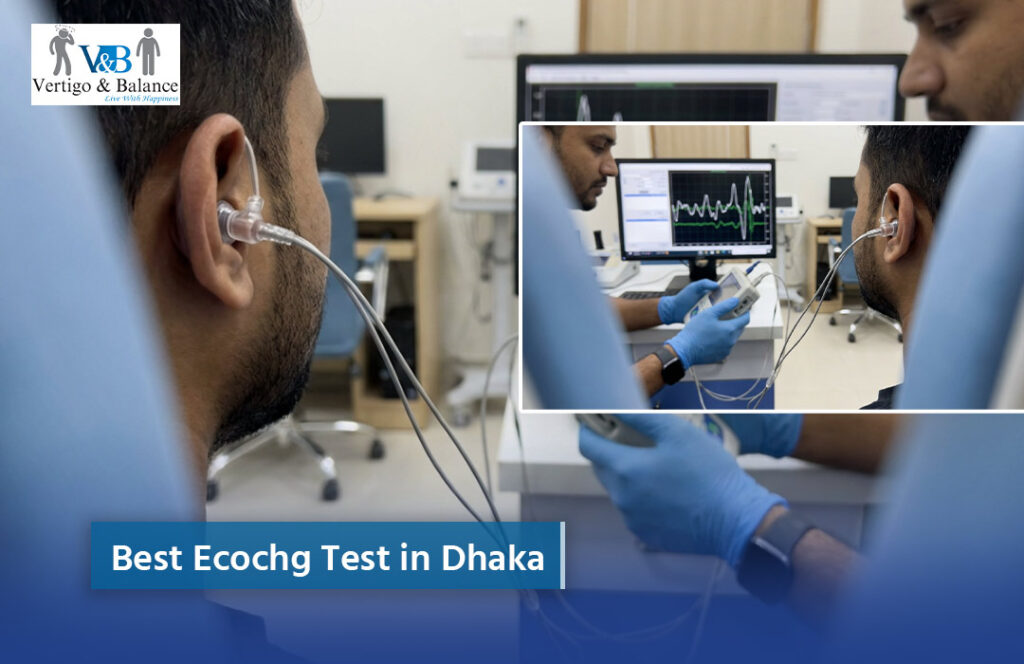
Best ECochG Test in Dhaka
Some causes of vertigo and dizziness are straightforward to identify, while others require highly specialized testing to uncover what standard examinations miss. One such test is ECochG, a diagnostic tool used specifically to evaluate inner ear fluid pressure and its connection to certain balance and hearing disorders. If you are searching for the best ECochG test in Dhaka, this guide explains what the test measures, when it is needed, and how Vertigo Balance, led by Dr. Sajib Saha, provides accurate and specialist-led testing.
What Is the ECochG Test
ECochG stands for Electrocochleography. It is a diagnostic test that records electrical potentials generated within the inner ear and auditory nerve in response to sound stimulation. This is typically done using a small electrode placed near or in contact with the ear canal or eardrum. The test measures two key electrical signals, known as the summating potential (SP) and the action potential (AP), and calculates the ratio between them. This SP or AP ratio is particularly useful in detecting a buildup of fluid pressure inside the inner ear, a condition known as endolymphatic hydrops.
Why the ECochG Test Matters
Endolymphatic hydrops, the abnormal buildup of fluid within the inner ear, is closely linked to Meniere’s disease, a condition that causes episodes of vertigo, fluctuating hearing loss, tinnitus, and a feeling of fullness or pressure in the affected ear. Diagnosing Meniere’s disease based on symptoms alone can be challenging, since several other vestibular conditions, including vestibular migraine, can present with overlapping symptoms. The ECochG test provides objective, measurable data that helps confirm or support a diagnosis, allowing for a more targeted and effective treatment plan rather than relying solely on symptom-based assessment.
Conditions the ECochG Test Can Help Diagnose
The ECochG test is most commonly used to support the diagnosis of Meniere’s disease, particularly in cases where symptoms are not entirely clear-cut or where confirmation is needed before starting long-term treatment. It is also useful in helping differentiate Meniere’s disease from vestibular migraine, two conditions that can appear similar but require different treatment approaches. In some cases, ECochG is also used to monitor how a patient’s inner ear fluid pressure responds over the course of treatment, providing an objective way to track progress beyond symptom reporting alone.
How the ECochG Test Is Performed
During an ECochG test, a small electrode is placed at or near the ear canal, and sound stimulation, usually delivered through headphones or an insert earphone, is presented to the ear being tested. The electrode records the resulting electrical activity generated by the cochlea and auditory nerve. The test is generally well tolerated, non-surgical, and does not require sedation, although patients are advised to remain still and relaxed during the recording to ensure accurate results. The entire procedure is typically completed within a single clinic visit.
How ECochG Fits Into a Complete Vestibular Workup
ECochG is rarely used as a standalone test. At Vertigo Balance, it is typically combined with other vestibular assessments to build a complete diagnostic picture. This often includes VEMP testing, which evaluates a different but related aspect of inner ear function through muscle response to sound, and VNG, which records eye movements to assess overall vestibular system performance. You can learn more about how these tests work together in our detailed guides on the best test for dizziness and the best test for vertigo, which cover the full range of diagnostic options used for balance disorders.
Because some patients with dizziness also have contributing factors unrelated to the inner ear, a complete workup at Vertigo Balance may also involve ruling out other causes. For patients whose symptoms overlap with sleep-related issues, our guide on when a sleep test is needed explains this connection further.
Who Should Consider an ECochG Test
An ECochG test may be recommended for patients experiencing recurrent episodes of vertigo along with fluctuating hearing loss, a persistent feeling of fullness or pressure in one ear, tinnitus that occurs alongside dizziness or balance problems, and symptoms that have not been clearly explained through basic vestibular screening. Patients who have been diagnosed with possible Meniere’s disease based on symptoms alone are often referred for ECochG testing to confirm the diagnosis with objective data before starting long-term treatment.
Why Choose Vertigo Balance for ECochG Testing in Dhaka
Vertigo Balance is a specialized vertigo and balance disorder center in Dhaka, led by Dr. Sajib Saha, MBBS (DU), BMDC Reg A-65718, and certified by the American Institute of Balance (AIB). The center offers comprehensive assessment and evidence-based treatment for vertigo, BPPV, vestibular migraine, Meniere’s disease, and other vestibular disorders, using advanced diagnostic testing rather than relying on symptoms alone.
Once a diagnosis is confirmed, treatment is tailored to the patient’s specific condition. For patients diagnosed with BPPV rather than fluid-related inner ear issues, this may involve approaches outlined in our guide on BPPV treatment. For patients with chronic dizziness and balance difficulties who benefit from structured rehabilitation, our Balance Retraining Therapy program offers a personalized, evidence-based recovery plan.
What to Expect During Your Visit
Your visit to Vertigo Balance begins with a detailed review of your symptoms, medical history, and any previous test results. Based on this evaluation, Dr. Saha determines which specific tests, including ECochG, VEMP, or VNG, are most relevant to confirming your diagnosis. After testing, results are explained in clear terms, and a personalized treatment plan is developed based on the confirmed underlying cause rather than a generic approach.
Clinic Location and Contact
Vertigo Balance is located at 68-69 Concept Tower, 3rd Floor, Room 337, Green Road, Dhaka-1205. Appointments can be booked by calling 01915 886655 or 01915 443366.
Book Your ECochG Test and Vestibular Evaluation Today
Living with unexplained vertigo, fluctuating hearing loss, or a persistent feeling of ear pressure can significantly affect daily life. The ECochG test, combined with a complete vestibular evaluation, offers a reliable way to confirm the underlying cause and move forward with an effective, targeted treatment plan rather than continuing to guess at the source of your symptoms.
Visit our Appointment page or call our clinic today to schedule your ECochG test and vestibular evaluation with Dr. Sajib Saha at Vertigo Balance in Dhaka.
This content is intended for general educational purposes and does not replace a professional medical evaluation. Please consult Dr. Sajib Saha or a qualified specialist for an accurate diagnosis of your specific symptoms.