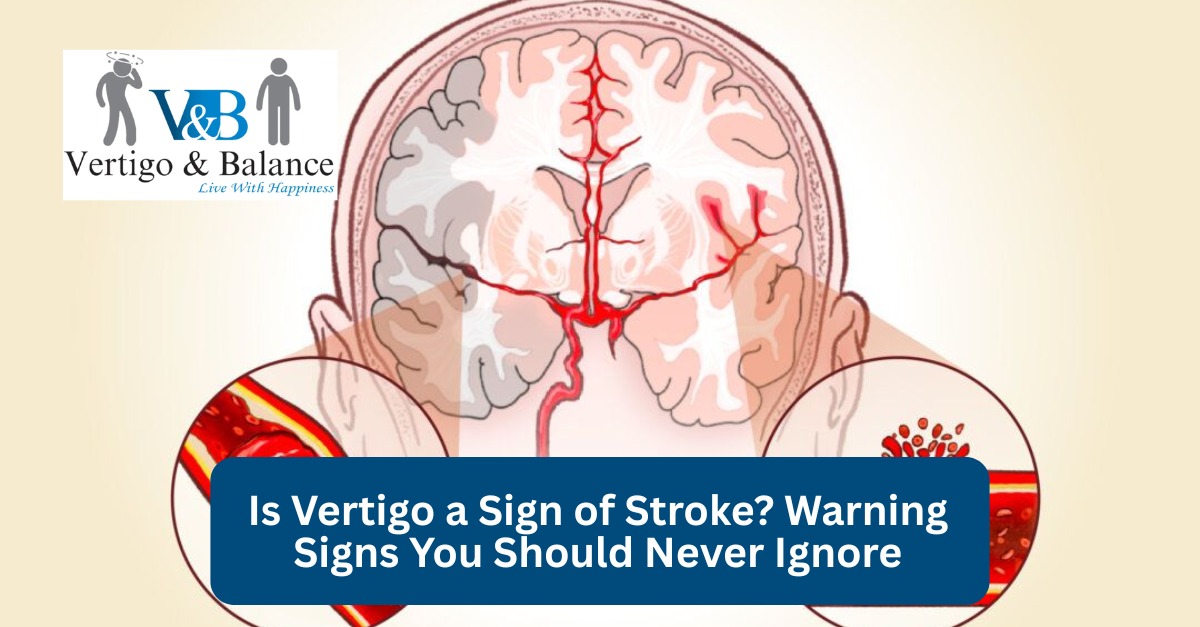
ertigo is a common condition that causes a sensation of spinning, dizziness, or imbalance. Many people experience vertigo due to inner ear disorders, vestibular problems, or other non-life-threatening causes. However, in some cases, vertigo can be an early warning sign of a stroke, especially when it occurs suddenly and is accompanied by other neurological symptoms.
Understanding the difference between ordinary vertigo and stroke-related vertigo can help save lives. While most vertigo cases are caused by conditions such as Benign Paroxysmal Positional Vertigo (BPPV), Vestibular Neuritis, or Ménière’s Disease, a small percentage of cases may indicate a serious problem involving blood flow to the brain.
In this article, we will discuss the relationship between vertigo and stroke, warning signs you should never ignore, diagnosis methods, treatment options, and when to seek immediate medical attention.
What Is Vertigo?
Vertigo is not a disease itself but a symptom of an underlying condition. It creates the false sensation that you or your surroundings are moving, spinning, tilting, or swaying.
Common symptoms of vertigo include:
- Spinning sensation
- Loss of balance
- Nausea and vomiting
- Unsteadiness while walking
- Motion sensitivity
- Difficulty focusing the eyes
- Feeling pulled to one side
Vertigo may last for a few seconds, several minutes, hours, or even days depending on the cause.
What Is a Stroke?
A stroke occurs when blood flow to a part of the brain is interrupted or significantly reduced. Without adequate oxygen and nutrients, brain cells begin to die within minutes.
There are three major types of stroke:
Ischemic Stroke
This is the most common type and occurs when a blood vessel supplying the brain becomes blocked by a clot.
Hemorrhagic Stroke
This occurs when a blood vessel in the brain ruptures and causes bleeding.
Transient Ischemic Attack (TIA)
Often called a “mini-stroke,” a TIA temporarily blocks blood flow to the brain and serves as a warning sign of a future stroke.
Early diagnosis and treatment are crucial because every minute counts during a stroke.
Can Vertigo Be a Sign of Stroke?
Yes, vertigo can sometimes be a sign of stroke.
A stroke affecting the brainstem or cerebellum—the areas responsible for balance and coordination—can cause sudden severe vertigo.
These strokes are known as:
- Cerebellar Stroke
- Brainstem Stroke
- Posterior Circulation Stroke
Because these strokes affect balance centers, patients may initially believe they are experiencing a simple inner ear problem rather than a medical emergency.
Unfortunately, this can delay diagnosis and treatment.
Why Does Stroke Cause Vertigo?
The brain relies on a complex network involving:
- Inner ear balance organs
- Vestibular nerves
- Brainstem
- Cerebellum
When blood flow to the brainstem or cerebellum is disrupted, the brain can no longer process balance signals properly. This results in symptoms such as:
- Severe dizziness
- Sudden vertigo
- Loss of coordination
- Difficulty walking
- Balance problems
In some cases, vertigo may be the first symptom of stroke before other neurological signs appear.
Warning Signs of Stroke-Related Vertigo
Most vertigo episodes are not caused by stroke. However, certain warning signs should never be ignored.
Seek emergency medical care if vertigo occurs along with:
Sudden Weakness
Weakness or numbness affecting:
- Face
- Arm
- Leg
Especially on one side of the body.
Difficulty Speaking
Warning signs include:
- Slurred speech
- Difficulty finding words
- Trouble understanding speech
Double Vision or Vision Loss
A stroke may affect the visual centers of the brain and cause:
- Blurred vision
- Double vision
- Sudden vision loss
Severe Difficulty Walking
If you suddenly cannot walk straight, stand properly, or maintain balance, immediate medical evaluation is necessary.
Severe Headache
A sudden, intense headache combined with vertigo may indicate a hemorrhagic stroke.
Facial Drooping
One side of the face may appear uneven or droop noticeably.
Difficulty Swallowing
Brainstem strokes can affect swallowing muscles and increase the risk of choking.
Sudden Loss of Coordination
Patients may experience:
- Clumsiness
- Falling
- Poor hand coordination
- Difficulty performing simple tasks
The FAST Stroke Test
Healthcare professionals recommend remembering the FAST acronym:
F – Face Drooping
Ask the person to smile. Is one side drooping?
A – Arm Weakness
Ask the person to raise both arms. Does one drift downward?
S – Speech Difficulty
Is speech slurred or difficult to understand?
T – Time to Call Emergency Services
If any of these signs are present, seek emergency help immediately.
Remember that vertigo combined with FAST symptoms significantly increases the possibility of stroke.
Differences Between Vertigo and Stroke
Understanding the differences can help identify when dizziness may be serious.
| Feature | Inner Ear Vertigo | Stroke-Related Vertigo |
| Triggered by head movement | Common | Less common |
| Hearing symptoms | May occur | Usually absent |
| Severe imbalance | Moderate | Often severe |
| Weakness or numbness | No | Often present |
| Speech problems | No | Common |
| Vision problems | Rare | Common |
| Coordination problems | Mild | Significant |
| Medical emergency | Usually no | Yes |
However, it is important to note that stroke can sometimes mimic inner ear vertigo, making professional evaluation essential.
Who Is at Higher Risk of Stroke?
Certain factors increase stroke risk.
High Blood Pressure
Uncontrolled hypertension is the leading risk factor for stroke.
Diabetes
High blood sugar damages blood vessels over time.
Heart Disease
Conditions such as atrial fibrillation can increase clot formation.
Smoking
Smoking damages arteries and increases clotting risk.
High Cholesterol
Excess cholesterol contributes to artery blockage.
Obesity
Being overweight increases cardiovascular risk.
Sedentary Lifestyle
Lack of physical activity contributes to poor vascular health.
Family History
Genetics can increase susceptibility to stroke.
When Should You Go to the Emergency Room?
Seek immediate medical attention if you experience:
- Sudden severe vertigo
- Difficulty walking
- Double vision
- Slurred speech
- Facial weakness
- Numbness
- Severe headache
- Sudden confusion
- Loss of consciousness
Never assume severe dizziness is harmless if it appears suddenly or is accompanied by neurological symptoms.
How Doctors Diagnose Stroke-Related Vertigo
A specialist may perform several tests to determine the cause.
Detailed Medical History
Doctors will evaluate:
- Symptom onset
- Severity
- Associated symptoms
- Risk factors
Neurological Examination
A neurological assessment helps identify abnormalities involving:
- Eye movements
- Muscle strength
- Coordination
- Reflexes
HINTS Examination
The HINTS test is a specialized bedside examination used to distinguish stroke-related vertigo from inner ear disorders.
MRI Scan
MRI is often the most accurate imaging test for detecting strokes affecting the posterior circulation.
CT Scan
A CT scan may help identify bleeding or major stroke events.
Blood Tests
These help evaluate underlying medical conditions contributing to stroke risk.
Treatment for Stroke-Related Vertigo
Treatment depends on the type and severity of stroke.
Emergency Stroke Treatment
For ischemic strokes, clot-busting medications may be administered if patients arrive within the treatment window.
Blood Thinners
These may be prescribed to reduce future stroke risk.
Blood Pressure Control
Managing hypertension is critical for preventing recurrent strokes.
Physical Rehabilitation
Patients often require rehabilitation to improve:
- Balance
- Walking ability
- Coordination
- Strength
Vestibular Rehabilitation Therapy (VRT)
VRT is a specialized therapy designed to improve balance and reduce dizziness after stroke or vestibular disorders.
Can Vertigo After Stroke Improve?
Yes. Many stroke survivors experience significant improvement with appropriate treatment and rehabilitation.
Recovery depends on:
- Stroke location
- Stroke severity
- Age
- Overall health
- Rehabilitation participation
Early intervention generally leads to better outcomes.
How to Reduce Stroke Risk
Several lifestyle changes can significantly reduce the risk of stroke.
Control Blood Pressure
Regular monitoring and medication compliance are essential.
Manage Diabetes
Maintain healthy blood sugar levels.
Quit Smoking
Smoking cessation dramatically lowers stroke risk.
Exercise Regularly
Aim for at least 150 minutes of moderate activity weekly.
Eat a Heart-Healthy Diet
Focus on:
- Fruits
- Vegetables
- Whole grains
- Lean protein
- Healthy fats
Maintain Healthy Weight
Weight management improves cardiovascular health.
Regular Medical Checkups
Early detection of risk factors can prevent complications.
Frequently Asked Questions (FAQs)
Is vertigo always a sign of stroke?
No. Most cases of vertigo are caused by inner ear disorders rather than stroke.
Can stroke cause dizziness without weakness?
Yes. Some posterior circulation strokes may initially present with dizziness or vertigo without obvious weakness.
How long does stroke-related vertigo last?
It varies depending on stroke severity and individual recovery.
Can vestibular rehabilitation help after stroke?
Yes. Vestibular Rehabilitation Therapy can significantly improve balance, coordination, and dizziness symptoms.
What is the biggest warning sign that vertigo may be caused by stroke?
Vertigo accompanied by speech difficulties, vision changes, weakness, numbness, severe imbalance, or sudden headache requires urgent medical evaluation.
Final Thoughts
Although most vertigo cases are related to inner ear disorders and are not life-threatening, vertigo can sometimes be an early sign of stroke. Recognizing the warning signs is critical because timely treatment can prevent permanent disability and save lives.
If vertigo occurs suddenly and is accompanied by weakness, speech problems, vision changes, severe imbalance, or other neurological symptoms, seek emergency medical care immediately. Early diagnosis and treatment provide the best chance for recovery and long-term health.
Never ignore sudden severe vertigo—your brain may be trying to tell you something important.